Manual vs Hydraulic Pipe Bender UK: Which Should You Actually Buy?
Choosing between a manual and hydraulic pipe bender comes down to one honest question: how often will you actually use it, and how much force do you need? Both have genuine advantages depending on your work, and neither is a blanket winner. This guide cuts through the marketing to help you pick the right one.
What You're Really Comparing
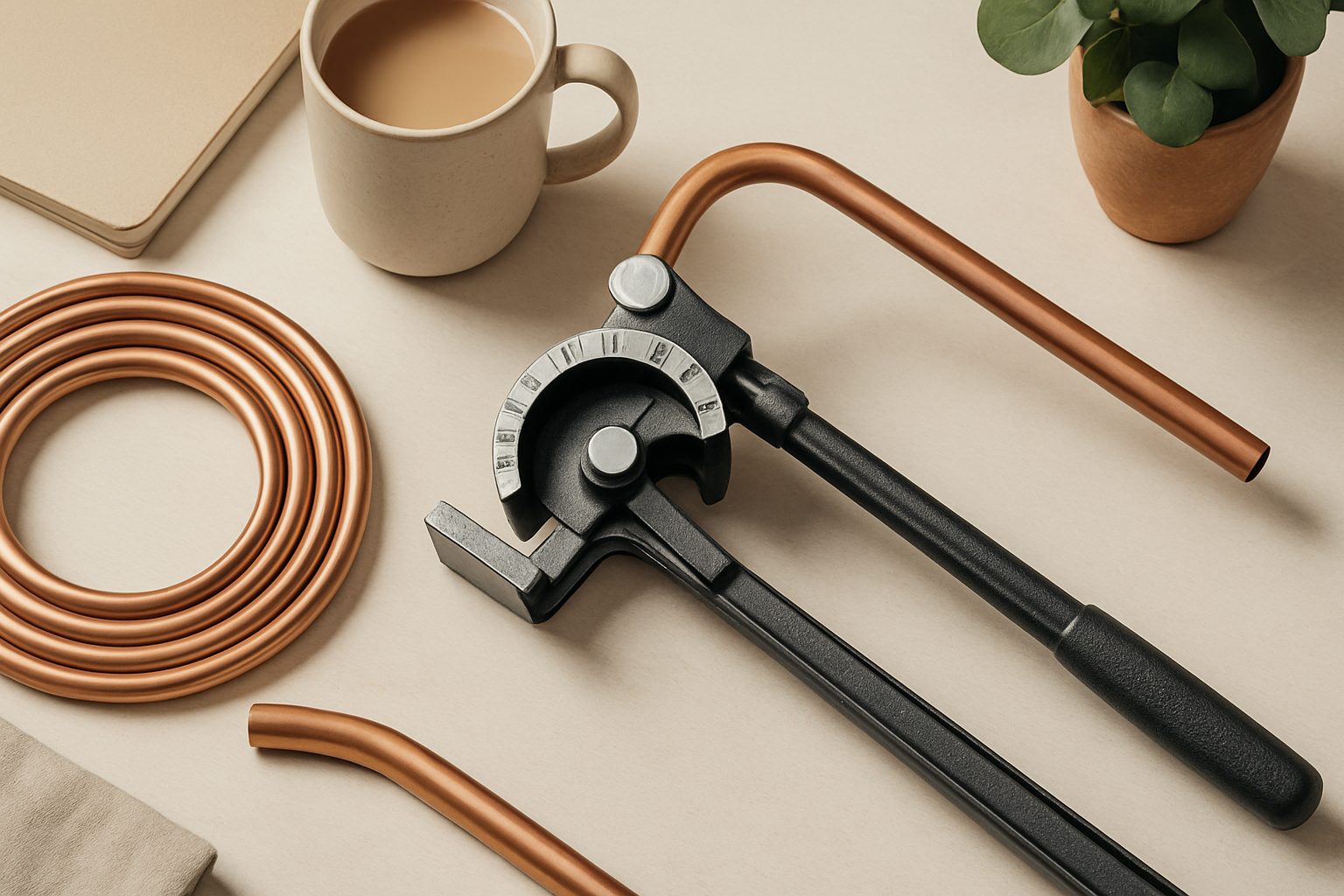
A manual pipe bender relies on your physical force applied through a long lever arm. You position the pipe, lock it, and bend it by pulling or pushing a handle—typically creating bends in 15 to 22.5-degree increments depending on the machine's design. The mechanical advantage comes from leverage and lever ratios, not motors.
A hydraulic bender uses a pump (usually hand-operated or electric-powered) to build pressure in cylinders that apply force to the pipe. That pressure does the heavy work; you're just directing it. Hydraulic systems can apply much greater force with minimal physical effort, and they're more precise about the final angle.
Strength and Force: Where They Diverge
Here's the critical difference: manual benders typically handle tube diameters up to 42 mm comfortably, with most doing 15 to 28 mm with ease. They work best on mild steel and copper—softer metals that don't require enormous force. If you're bending thin-wall stainless steel or anything thicker than 42 mm, a manual bender becomes genuinely difficult or impossible.
Hydraulic benders scale up. A mid-range unit will bend 42 mm tubing without fuss, and larger models handle 76 mm or more. Stainless steel, hardened alloys, and thicker wall gauges? Hydraulic handles them. If you're working with material that requires real force, manual simply won't cut it.
Speed and Workflow
Manual benders are slower. Each bend takes a deliberate movement—pull the lever, lock, reset position, next bend. For a job with a dozen bends, you'll feel it. For three bends on a weekend project, you won't notice.
Hydraulic benders, particularly hand-pump models, still require you to work at a measured pace, but the actual bending stroke is faster. Electric-pump versions compress that further. If you're bending ten metres of copper pipe for a heating system, the hydraulic wins on time.
Cost: The Real Trade-off
Manual benders cost between £150 and £400 in the UK, depending on capacity and build quality. A reliable model from a reputable maker—one that holds its dies square and doesn't twist the pipe—sits around £250–£350. They hold that value reasonably well because they're simple and durable.
Hydraulic benders start at roughly £500 for a hand-pump unit and climb to £1,500 or £2,000 for electric models with larger capacity. A solid mid-range hand-pump bender runs £700–£1,000. That's a real step up in budget.
If you're renting rather than buying—which many tradespeople do—a manual bender costs around £30–£50 per day from hire shops. A hydraulic typically costs £60–£100. Over a short job, that gap matters.
Setup and Space
Manual benders are compact. Most fit on a workbench or stand taking up less than a square metre. No hoses, no pump to store, no mess. You bolt it down or clamp it, and it's ready.
Hydraulic hand-pump models are still reasonably portable. Electric-pump versions are heavier and need power, plus space for hoses and the pump unit itself. If you're working in a confined space—a loft, a tight plant room—a manual bender is friendlier.
Accuracy and Bend Quality
Manual benders give you coarse control. If the design has a 22.5-degree increment system, you're bending in those steps. Some models offer multiple die positions for finer angles, but it's incremental, not infinitely variable.
Hydraulic benders, particularly those with pressure gauges and adjustable stops, let you dial in precise angles. You hit the mark more consistently, and there's less risk of overbending because the pressure release is controllable. For complex layouts or plumbing work where angles matter, hydraulic's precision is worth it.
Who Should Buy Which
Buy a manual bender if:
- You're a plumber or heating engineer doing occasional bends (small jobs, maintenance, refurbishment).
- You're working mostly with mild steel or copper, sizes up to 28 mm.
- Budget is tight and you don't mind the physical effort.
- You value simplicity and minimal maintenance.
Buy a hydraulic bender if:
- You're bending regularly—weekly or more often.
- You work with stainless steel, hardened materials, or larger diameters.
- You're fitting a complex heating system or doing extensive pipe runs.
- Speed and precision matter more than cost.
- You have the workspace and budget.
The Practical Reality
A decent manual bender—something like a modest heavy-duty model in the £300 range—will serve most small businesses and serious DIY jobs genuinely well. It's not flashy, but it works.
If you're bending professionally on a regular basis, a hydraulic hand-pump model around £800–£1,000 is the sensible middle ground. You avoid the cost and power demands of an electric pump while getting the force and precision hydraulics offer.
The worst decision is buying whatever's cheapest on the day. A flimsy manual bender that twists or doesn't hold angles wastes more time and frustration than paying a bit more for a robust one. Similarly, a hydraulic bender gathering dust because it was overspecced for your actual work is wasted cash.
Start by being honest about what you'll bend, how often, and what materials. The right tool isn't the most expensive—it's the one that actually fits your job.
More options
- Clarke Pipe Benders (Clarke PB16F & Clarke Strongarm range) (Amazon UK)
- Silverline Pipe Benders & Spring Bender Sets (Amazon UK)
- Monument Pipe Bender & Lever Bender Range (Amazon UK)
- Hydraulic Pipe Bender Kits (12T / 16T multi-former sets) (Amazon UK)
- Rothenberger Rocbend & Copper Pipe Bender Sets (Amazon UK)