How to Bend 22mm Copper Pipe for Central Heating Runs UK
Extending or reconfiguring your central heating system often requires bending 22mm copper pipe to fit around obstacles and reach new radiator positions. Whilst bending 22mm pipe by hand is possible, it demands technique and the right tools to avoid kinks and splits that'll weaken or block your heating circuit.
Why 22mm Copper Pipe Needs Proper Bending
22mm is the standard UK diameter for main heating distribution runs and larger feed pipes. Unlike thinner microbore pipework, 22mm pipe has enough wall thickness to handle pressure without splitting—but only if bent correctly. A kink concentrates stress and can collapse the pipe internally, restricting flow to radiators. A sharp crease also becomes a weak point where the pipe may eventually fracture under thermal cycling.
The goal when bending is to create a smooth curve with a consistent radius. How you achieve that depends on the bend angle needed, your budget, and the space you're working in.
Hand Bending: When It Works and When It Doesn't
You can hand-bend 22mm copper pipe using a spring bender (also called a pipe bending spring)—a coiled steel spring that slips over the pipe and supports it from collapsing inward as you bend. Spring benders are cheap, portable, and genuinely useful for gentle curves.
Advantages:
- Low cost (£2–£5 per bender)
- No power required
- Good for 45–90-degree bends with a gentle radius
- Easy to keep on site
Limitations:
- Difficult to achieve tight bends without kinking
- The spring can stick inside the pipe if you bend too sharply
- Hard work on your hands and wrists for multiple bends
- Takes practice to get consistent results
- Not suitable for bends tighter than 2–3× the pipe diameter
For most kitchen-to-radiator runs or gentle routing around kitchen units, a spring bender gets the job done. For tighter bends or larger projects, a machine bender saves time and gives better results.
Ratchet Benders: The Middle Ground
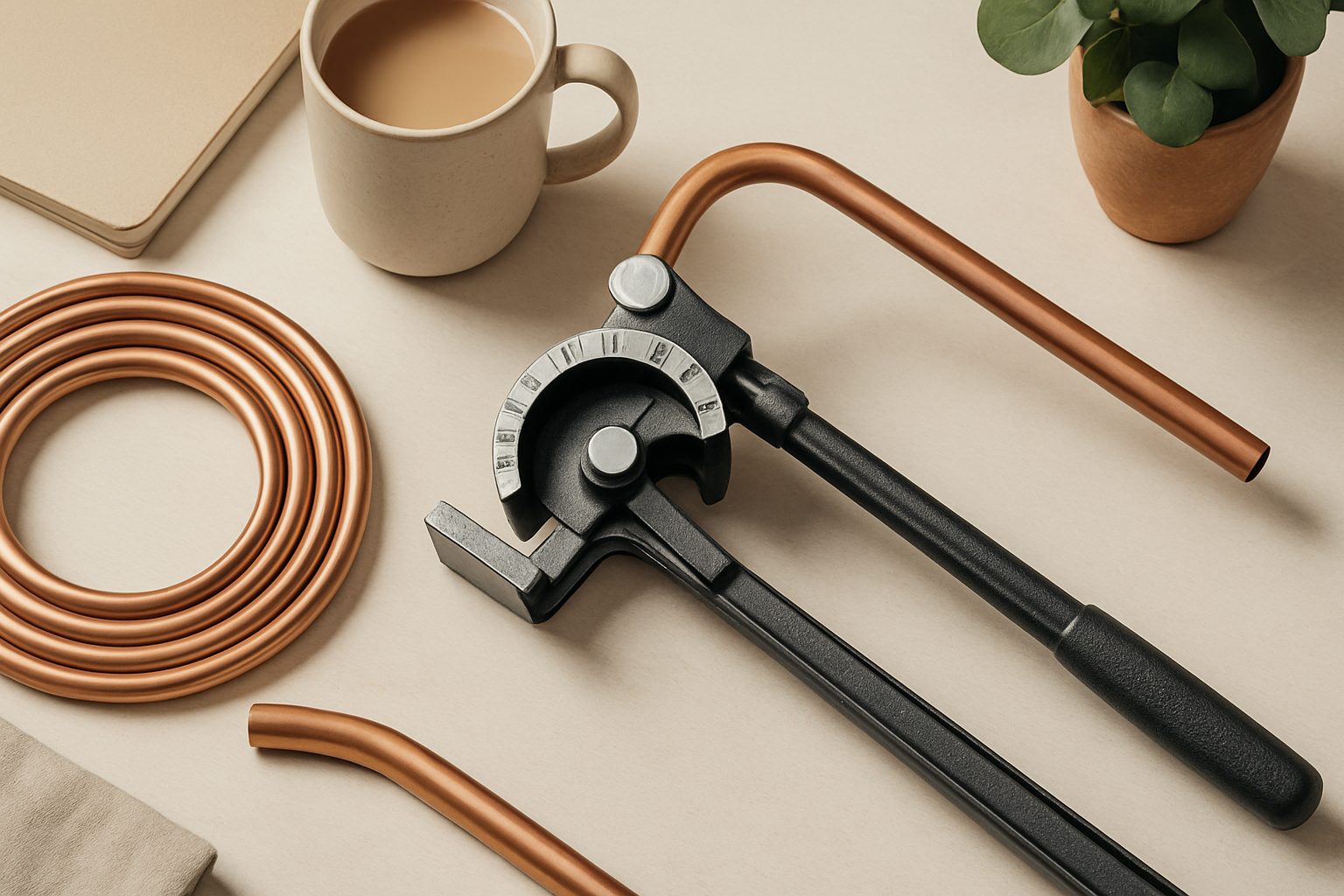
A manual ratchet pipe bender (sometimes called a lever bender) is the sweet spot for homeowners doing a full system extension. These clamp the pipe and bend it through a die sized for 22mm, controlling the bend radius precisely.
How they work: The pipe sits in a grooved die that matches the 22mm diameter. A hinged handle with a ratcheting mechanism pulls the pipe through the bend gradually. Each ratchet stroke advances the bend angle by a few degrees—you keep operating the handle until you reach the angle you need.
Why ratchet benders work well:
- Bend radius is determined by the die shape, so you get consistent, smooth curves
- Less physical effort than hand bending
- Much lower risk of kinks or splits
- Typically bend to 90 degrees in one setup
- Cost is reasonable (£25–£60 for a decent one)
- Portable and hand-operated
The main trade-off is that you're limited to the bend angles and radii the die allows. Most 22mm ratchet benders can't achieve bends tighter than a 3–4× pipe-diameter radius, but that covers the vast majority of heating system work.
Bench-Mounted Benders: For Serious Projects
If you're fitting a new system or adding multiple radiator feeds, a bench-mounted hydraulic or lever bender removes guesswork. You secure the tool to a workbench, feed the pipe through, and apply leverage or pump pressure to bend it. These machines produce consistently perfect bends and handle multiple pipes quickly.
Realistic cost: £80–£200 for a manual bench bender; hydraulic versions are dearer but still available second-hand for £150–£400.
These suit plumbers or ambitious DIYers doing a full rework. For a single extension or a handful of bends, the rental cost may exceed what you'd spend on a ratchet bender.
Practical Tips for Bending 22mm Pipe
Measure twice. Dry-fit your pipes before you bend anything. Mark the bend point clearly—a pen line or tape marker helps you position the bender correctly.
Deburr the pipe. After cutting, use a reaming tool or file to smooth the inside and outside edges. Rough edges catch scale and reduce bending efficiency.
Work in a single pass if possible. Don't bend, then rebend. Each bend work-hardens the copper; repeated bending in the same spot raises the risk of cracking.
Use the right size die or spring. A 22mm bender that's slightly too large or too small won't give a smooth curve. Check the tool is rated for 22mm copper specifically.
Cool the pipe if needed. On a tight bend using a ratchet or bench tool, you can carefully apply a damp cloth to cool the copper mid-bend. This softens it slightly and reduces the risk of kinking. Never use an open flame—it'll anneal the copper and make it worse.
Check the bend radius. After bending, sight along the pipe. The curve should be smooth and uniform, not flat on one side or sharper on the other.
Testing and Common Mistakes
Once you've bent your pipe, connect it to the system, fill, bleed air, and check for leaks at the bend joints. A weeping joint at a bend suggests the copper was already weakened before installation—not a failure of the bend itself.
The most common error is trying to bend too tight with inadequate equipment. If you're struggling and the pipe starts to flatten, stop. You're either using the wrong tool or the bend angle isn't achievable without professional equipment.
The Bottom Line
For extending central heating in the UK, a manual ratchet bender offers the best balance of cost, ease of use, and reliability for most homeowners. Hand bending with a spring works for gentle curves; bench benders are worth considering if you're fitting a complete new system. Whichever route you choose, work methodically, use sharp tools, and don't force it—copper tells you quickly when it's unhappy.
More options
- Clarke Pipe Benders (Clarke PB16F & Clarke Strongarm range) (Amazon UK)
- Silverline Pipe Benders & Spring Bender Sets (Amazon UK)
- Monument Pipe Bender & Lever Bender Range (Amazon UK)
- Hydraulic Pipe Bender Kits (12T / 16T multi-former sets) (Amazon UK)
- Rothenberger Rocbend & Copper Pipe Bender Sets (Amazon UK)